
The kind of store parents can use on a busy morning
Parents shopping for uniforms usually want one thing quickly, the right size for the right school item. A proper store layout helps them check shirts, skirts, trousers, socks, ties and tracksuits without phoning around or scrolling through a messy catalogue. For traders in Soweto, Johannesburg, Durban, Cape Town, Pretoria and Gqeberha, that matters because most orders arrive on mobile phones and many are placed during lunch breaks or after work.
A useful store for this trade should show the school name if needed, item type, sizes, colour, fabric notes and whether an item is available now or on order. If you sell for more than one school, separate each school clearly. That stops confusion, especially when parents need exact measurements for growing children and want to compare primary and high school items side by side.
What to show for each uniform item
Uniform buyers do not want long product descriptions. They want the facts that help them choose correctly. Good product pages for this trade should carry clear photos, sizes, pricing and stock notes. If you offer seasonal items like jerseys, rain jackets or winter shirts, make that easy to spot too.
- Sizes in ages, waist, chest or shoe sizes where relevant
- Item list with plain names such as shirt, skirt, shorts, jersey or sports sock
- Colour details and any school-specific trim or badge notes
- Price per item and bundle pricing where you use it
- Seasonal notes such as winter stock, summer stock or limited sizes
- WhatsApp order button for parents who want to confirm fit first
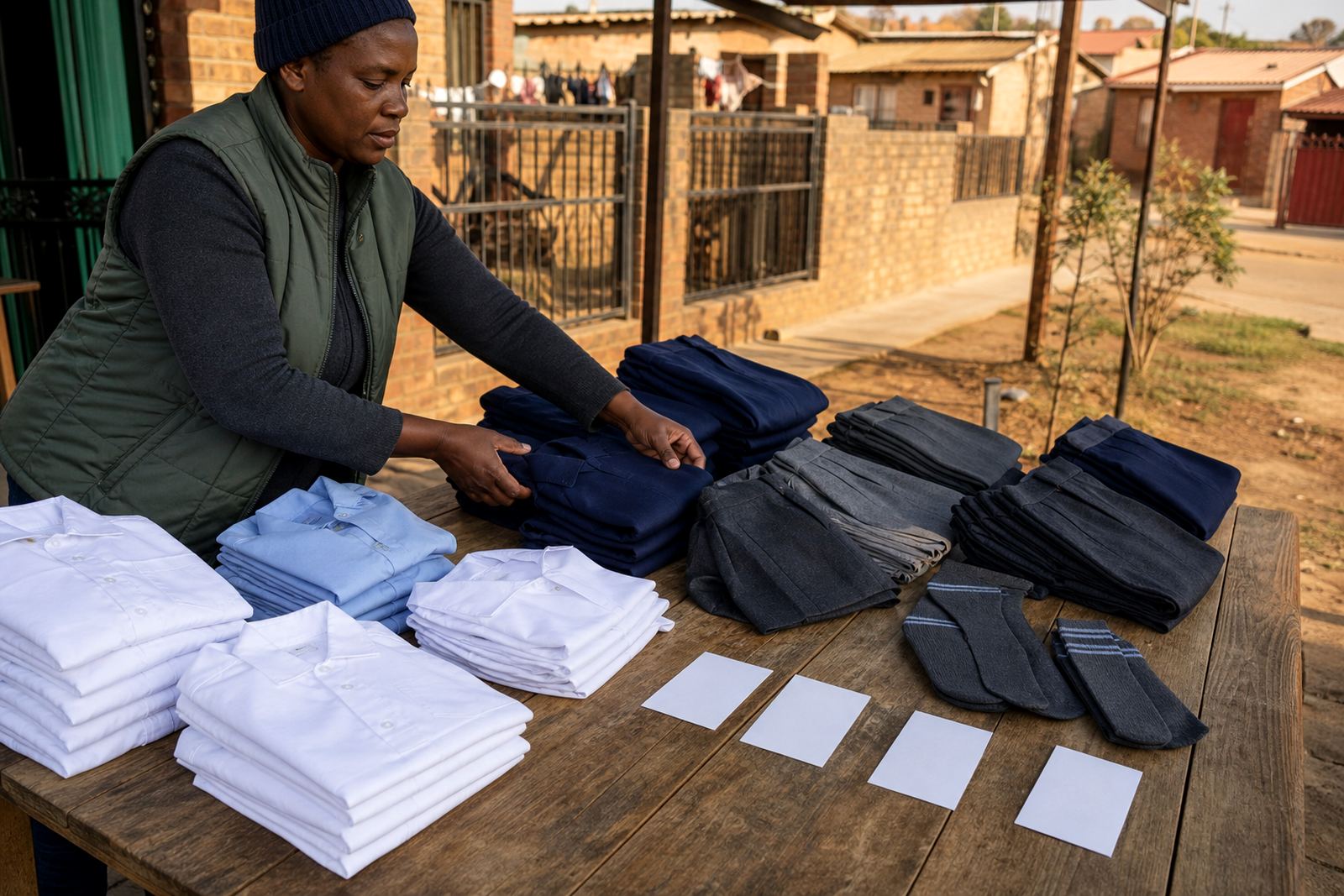
For photos, natural light works well. A flat lay on a plain surface, a hanger shot and a close-up of the fabric or badge area is often enough. In humid coastal areas like Durban and Gqeberha, keep garments pressed and dry before photographing so the material does not look creased or dull.
A store layout that saves time at the till and on WhatsApp
When a school uniform business grows, the same questions come in every day. Parents ask about sizes, stock, fitting and delivery. A good online store can answer many of those questions before they reach your inbox. That is where simple pages for pricing, delivery and WhatsApp orders help.
- Home page with clear categories for primary school, high school and accessories
- Pricing page that lists items in a neat order, not buried in paragraphs
- Delivery page with collection points, local delivery areas or courier options
- WhatsApp order setup for parents who prefer to send a quick message
- Payments page with the methods you accept, kept in plain language
If you also serve informal traders or spaza shops that resell uniform basics, a separate catalogue section can help. That keeps bulk orders away from parent orders and makes sorting easier on busy days. For home businesses in townships, a light catalogue and a short order form often work better than a complicated store with too many fields.
Planning advice for term-time trading
Uniform sales move with the school calendar, so planning is part of the setup. Before adding products, group your stock by season and by the age groups you serve most often. This helps you update quickly when winter items come in, when schools reopen or when a new intake brings more demand for smaller sizes.
Put your best selling items near the top of the store. That might be white shirts, grey trousers, navy skirts, tracksuits, belts, socks or school shoes if you stock them. Keep the wording plain and local. A parent in Alexandra or Tembisa should be able to understand the offer in a few seconds on a small screen.
For payment and delivery, keep options practical. Some traders accept card payments, EFT or cash on collection, while others use courier for out of area buyers. If you are unsure about any payment or tax detail, check with SARS or a qualified adviser so your business records stay in order.
Common mistakes that slow down uniform orders
The biggest problem is confusion. If sizes are mixed up or item names are inconsistent, parents waste time and stock returns become harder to manage. Another common mistake is using photos that are too dark, too crowded or taken in poor light. That makes navy, grey and white items hard to compare, especially on a phone screen.
Do not bury school names inside long product descriptions. Do not leave out size charts, and do not assume every parent understands the same sizing system. If you sell both individual items and full sets, make the difference clear. Also avoid listing seasonal stock without saying when it is likely to be available, because parents plan early when a new term starts.
- Missing size charts or unclear measurements
- Too many items in one category
- No clear stock note for winter or summer items
- Prices not matched to the correct size or set
- Photos that do not show the fabric, trim or cut properly
Budget ranges that suit a small uniform business
Every trader starts at a different point, so the budget depends on how many items you want to list and how much help you need with photos, writing and structure. A small setup for a single school range can be kept fairly lean, while a larger catalogue with multiple schools and delivery options needs more time and content work.
In Rand terms, many small uniform sellers start with a basic store plan in the low thousands, then add product uploads, content writing and photo guidance as the catalogue grows. A more detailed setup for several schools, extra pages and training can move higher. The right range depends on whether you need a simple parent-facing shop or a fuller catalogue with more admin support.
Keep your budget tied to the parts that affect sales most. For this trade, that usually means clear product pages, accurate sizing, clean photos and an order path that works on a phone. If the store makes it easier for parents to find the right uniform, it is doing useful work.