

A store that suits finished pieces and made-to-order work
Furniture sellers usually need two things on the same page. One is a clean way to show ready-to-buy items like chairs, tables, shelving, sideboards and bedroom sets. The other is a clear path for custom work, where a customer asks for a size, timber finish, fabric choice or a full room set. A simple online store can handle both without making the browsing experience messy.
For furniture makers in Soweto, Alexandra, Tembisa and the wider Johannesburg area, a store page helps customers see what is available before they travel to a workshop or call to ask questions. That matters when people are comparing delivery to Durban, Cape Town, Pretoria or Gqeberha, or when they need a piece made to suit a flat, house or small business space.
- Display completed items with clear names and short descriptions
- Separate ready stock from custom order items
- Add a simple enquiry button for sizes, finishes and lead times
- Show delivery areas and collection options clearly
What a furniture store needs on day one
A furniture catalogue works best when the first view is tidy and practical. Strong product photos, a price line or starting price, and a short note on dimensions will do more than a long sales pitch. Customers want to know what wood or board is used, whether the item can be changed, and if the colour shown is the colour they will receive. In coastal areas like Durban and Gqeberha, buyers also look for material choices that handle humidity a bit better than cheap finishes.
Useful features for a furniture store usually include:
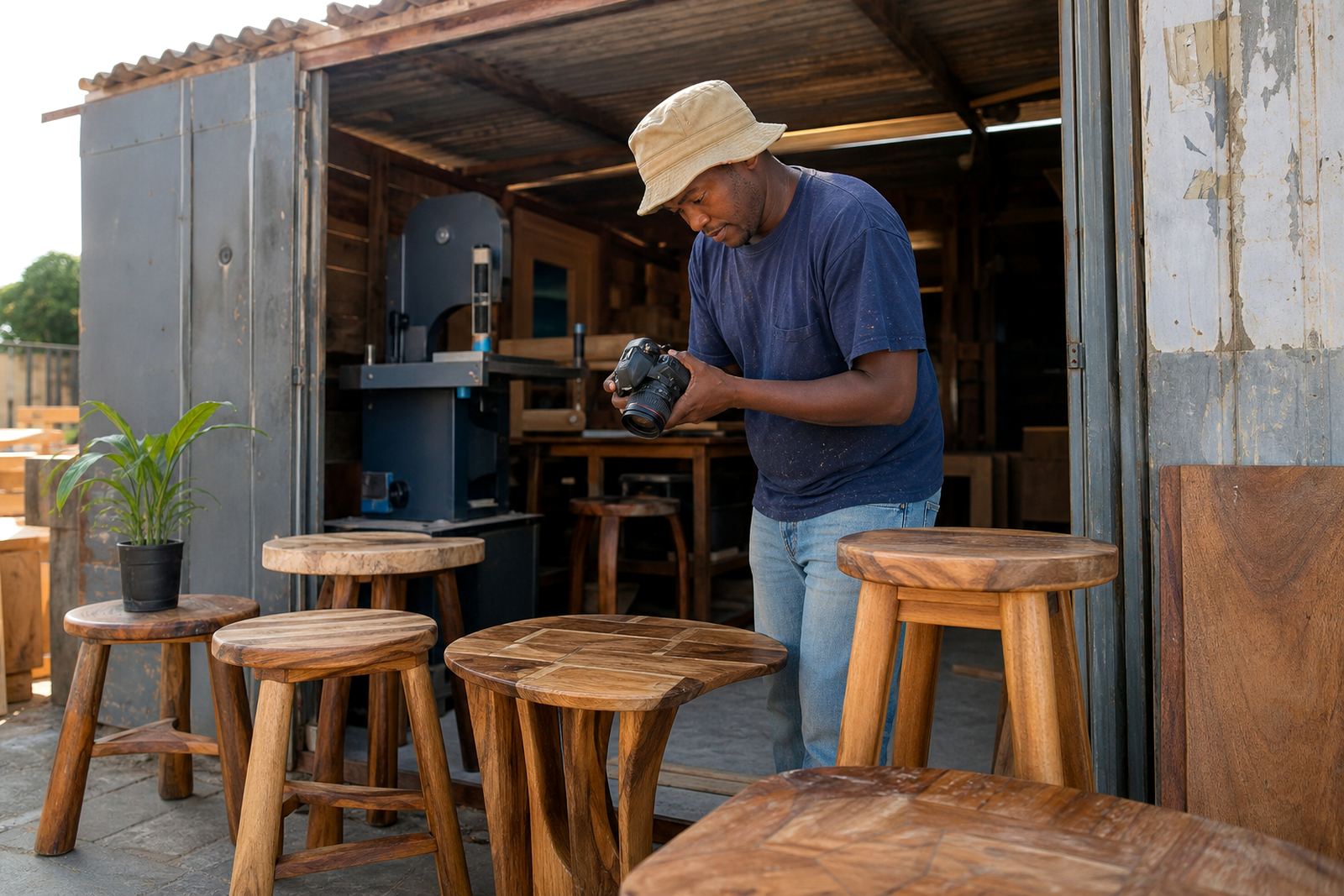
- Product photos taken in good light, with one close-up of joints, handles or finish
- A pricing page that shows fixed prices or a clear way to request a quote
- WhatsApp order setup for quick questions and photo sharing
- Payment info setup with the options you already use for orders
- Delivery page setup for local drop-offs, courier use or collection from the workshop
Some sellers also need a small content refresh for the home page so visitors can see the main lines fast. A plain layout works well for this trade. Too many banners, moving parts or cluttered sections can hide the actual products and make the store harder to use on a phone.
Planning the pages around how furniture buyers shop
Furniture buyers often browse in a few stages. They may first look for style, then compare size, then ask for the finish, then check how delivery works. A store layout should match that sequence. Put your most popular items near the top and keep custom order information close to the relevant products, not buried on a separate page where people lose interest.
For home businesses and small workshops, the best structure is usually simple:
- Home page with featured products and a short line about custom work
- Category pages for seating, tables, storage, bedroom pieces and outdoor pieces
- Product pages with dimensions, finish notes and lead time details
- A custom order section with a short form or WhatsApp link
- A delivery and collection page with town and province coverage
If you sell both standard items and made-to-order pieces, use wording that makes the difference clear. A customer should know whether a price is for the item shown or only for a similar design. That small bit of clarity can reduce repeat questions and helps avoid confusion when a customer wants a different size or timber colour.
Common mistakes that make furniture stores harder to use
Many furniture pages fail because they try to do too much at once or leave out the details buyers care about. A blurry sofa photo, no dimensions, and no note on whether the item is ready or custom made can lead to many back and forth messages. Another common problem is listing every product in one long page, which makes it hard for a customer to find a dining set or bed frame quickly.
These mistakes are worth avoiding:
- Using dark or uneven photos that hide the finish of the wood or upholstery
- Leaving out measurements, so buyers do not know if an item fits their room
- Putting all products on one page with no category sorting
- Listing a price without saying whether it includes delivery or only collection
- Using unclear wording for deposits, quotations or custom requests
It also helps to avoid overloading the store with too many fonts, busy backgrounds or long paragraphs. Furniture is visual. Let the item pictures do the main work, then support them with short, useful text. For informal traders and workshop owners, that keeps the page practical on low data connections and mobile phones.
Budget ranges that make sense for a furniture maker store
Furniture makers often start with a smaller product list and grow the catalogue as stock and workshop capacity allow. A lean store can begin with a few core pages, a product upload for the main items, and a simple WhatsApp order path. A more complete store may include category pages, delivery areas, pricing pages, content writing and staff training for someone who updates the catalogue.
Typical budget ranges in Rand can vary depending on how many products need uploading and how much content support is needed. For a small furniture range with a basic store structure, many traders work from a lower starting range. For a larger catalogue with many product photos, category sorting and order setup, the spend is usually higher. The useful question is not only what the store costs, but how much time it saves the workshop owner when customers can see the options clearly before asking for a quote.
If your furniture business handles payments, deposits, delivery notes and custom orders, it is worth checking the practical side of your records with SARS or a qualified adviser. That keeps the admin side in order while the store stays easy for customers to use.
How SellThat supports furniture sellers across South Africa
SellThat works with traders and home businesses that need a direct, usable online store rather than a complicated setup. For furniture makers, that means help with product upload, photo guidance, pricing page help, WhatsApp order setup, payment info setup, delivery page setup, catalogue rebuilds, store content writing and training. The store should be straightforward for the owner to manage, whether the business is in Soweto, Johannesburg, Durban, Cape Town, Pretoria or Gqeberha.
That support is useful when a maker is juggling workshop work, deliveries, customer messages and quote requests. A clear store can cut down on confusion and make it easier to show a professional face online without losing the practical style that informal traders rely on.
- Store Setup for a clean first build
- Product Upload Help for seating, tables and storage ranges
- Photo Guidance so finishes and sizes are easier to judge
- WhatsApp Order Setup for custom requests and quick replies
- Ongoing Support when the catalogue needs updates
When the pages are laid out properly, furniture buyers can move from browsing to enquiry without confusion. That is the main value of a simple store for this trade: less explaining from scratch, more time spent on making and selling the pieces that people want.