
How party shoppers usually browse before they buy
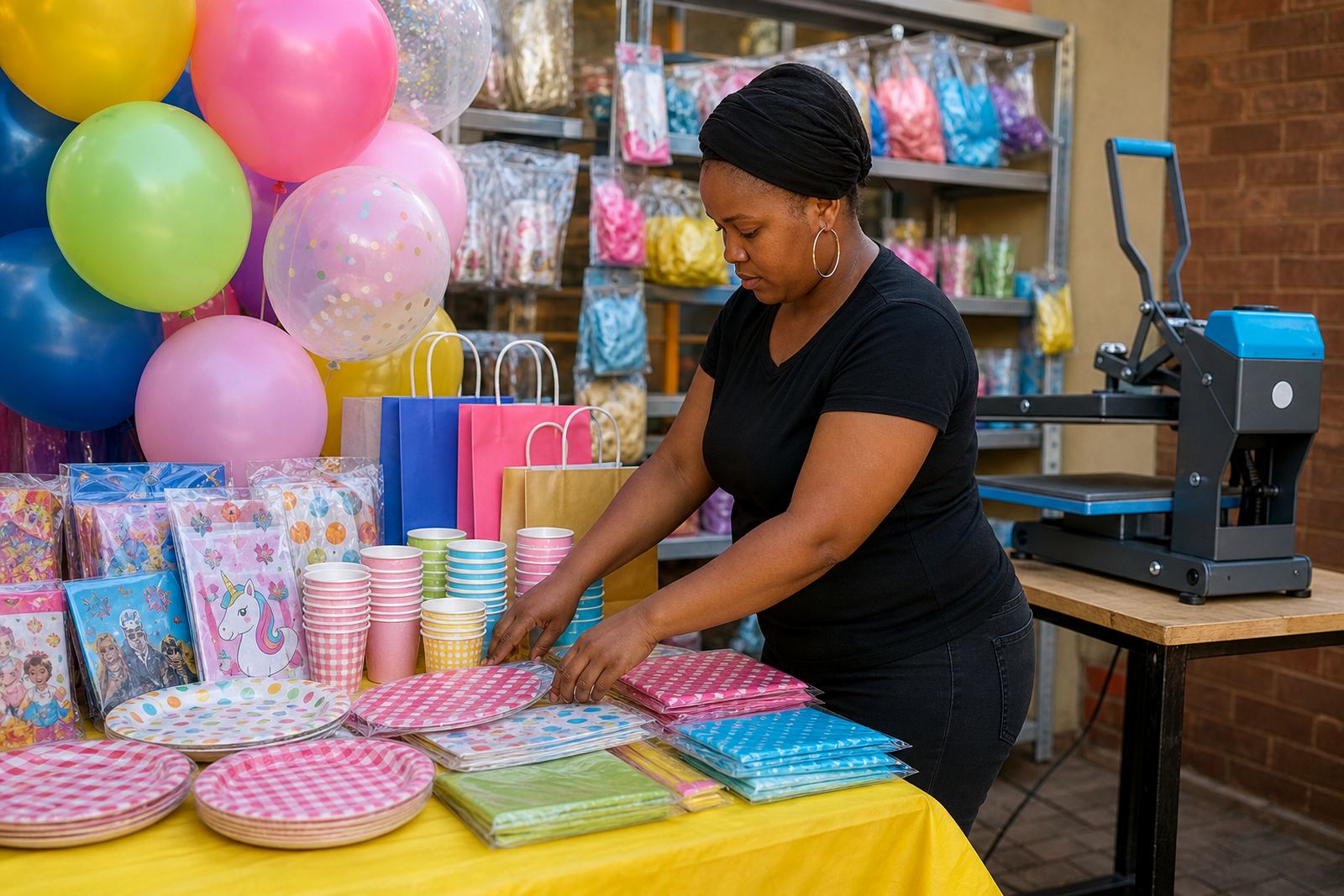
Most party buyers are planning a birthday, school function, church event or small family gathering, so they want to see the range quickly. They compare colour themes, pack sizes, balloon counts, tableware, banners and matching décor before they decide what fits the event.
For traders in Soweto, Johannesburg, Durban, Cape Town, Pretoria and Gqeberha, the store should answer the first few questions at a glance. What is in the pack, how many people it suits, which colours are in stock, and whether the seller can prepare a mixed order for collection or delivery.
- Show individual items and party packs separately
- Group products by theme, colour or event type
- Use clear wording for bulk orders and mixed sets
- Make WhatsApp the quickest path for questions
A practical set of pages for décor and event stock
A party store does not need many pages, but the right ones matter. A strong home page, product pages, a pricing page, delivery details and a clear WhatsApp order setup usually cover the basics well. If a trader stocks helium balloons, plates, cups, serviettes, table covers, gift bags and cake toppers, each group should have its own section so buyers do not get lost.
Many sellers also need a page for lead times. This is useful for printed items, mixed colour packs and larger event orders that need sorting before collection. When the lead time is stated clearly, customers are less likely to expect instant availability on every item.
- Home page with popular categories and best selling items
- Product pages with size, colour and pack count
- Pricing page for singles, packs and bulk quantities
- Delivery page with local areas served and collection notes
Photos that help customers trust what they are seeing
Party goods sell better when the photos are honest and neat. Buyers want to know the real colour of the décor, the finish of the items and whether the pack looks full enough for the occasion. A plain background, good light and one close up image often help more than busy displays. In coastal areas like Durban and Gqeberha, careful storage matters too because humidity can affect paper goods, adhesives and some décor finishes.
If the seller uses stock from a spaza shop, home business or small storeroom, the photos should still look tidy. Avoid blurry shots, dark corners and images where the product is half hidden by other items. A few clear pictures are better than many unclear ones.
- Use one photo of the full pack and one close up of key items
- Show scale where possible, especially for banners and table décor
- Keep lighting even so colours do not look misleading
- Retake pictures when stock changes or packaging changes
WhatsApp orders, payments and delivery without confusion
Party sellers often take quick enquiries first, then confirm the order on WhatsApp. That works well if the store makes it easy to send a product enquiry with the item name, colour choice and quantity. Payment details should be shown plainly, together with any proof of payment steps the seller wants followed. If card, bank transfer or another payment option is used, it should be named clearly on the store so the customer knows what is accepted.
Delivery pages need to explain local drop off zones, collection points and any limits on fragile items. For larger event orders, a seller may need to note that delivery depends on stock count, packing time and distance. If a customer wants exact timing for a function, it is better to state the order preparation process than to guess.
- WhatsApp button on every product page
- Short order notes for colour, quantity and event date
- Payment information in one visible place
- Delivery wording for local areas and urgent orders
Layout choices that suit traders working from Soweto and beyond
Party sellers in places like Alexandra, Tembisa and wider Johannesburg often work from compact stock rooms, home spaces or shared trading areas. The store layout should make it easy to load new products, add seasonal items and update prices without rebuilding everything. A clean catalogue structure helps when stock changes for festive seasons, school events or year end functions.
The best layout uses clear category names and short product descriptions. It also helps to place the busiest lines near the top, such as balloons, disposable tableware, party packs and themed décor. If the store sells for several towns, the same layout can still work, but delivery notes should reflect where orders are collected or sent.
Common mistakes that slow party orders down
One of the biggest problems is hiding important details in long descriptions. A customer should not have to guess how many pieces are in a pack or whether the colour shown is the exact colour supplied. Another common issue is mixing one off items with bulk orders on the same page, which makes it harder for buyers to understand what they are paying for.
Some sellers also forget to update sold out items quickly, especially when popular colours move fast around weekends and holidays. That can lead to wasted messages and unhappy customers. A clear product upload process helps reduce those problems, along with a proper pricing page and a catalogue that is reviewed often.
- Do not hide quantity, size or colour information
- Do not leave out lead times for printed or mixed packs
- Do not mix single item prices with bulk prices without labels
- Do not keep unavailable stock visible for too long
Budget ranges that suit small and growing party shops
Budgets vary depending on how much stock a party seller already has and how much help is needed with setup. A very small starter store with a handful of products and basic pages may fit a modest budget, while a larger catalogue with many categories, pricing tables and catalogue rebuilding will cost more. The main thing is to spend where buyers notice it first: product photos, order flow and clear pricing.
For many traders, it helps to think in layers. The first layer covers the core store pages and product upload. The next layer adds photo guidance, catalogue tidy up and delivery wording. The final layer may include ongoing support, training for staff and regular updates for seasonal ranges. If tax or payment handling raises questions, check with SARS or a qualified adviser.
- Starter setup for a small catalogue
- Mid range support for more products and better page structure
- Higher budget for catalogue rebuilds and training
- Extra planning for seasonal ranges and event specific stock