
When meals move fast, the page must stay clear
For cooked food traders in Soweto, Johannesburg and across South Africa, the biggest challenge is not only cooking well, it is letting people know what is ready, what is sold out, and when orders close. A proper online store gives your food list one place to live, so customers can see breakfast plates, kota, pap, stew, bunny chow, vetkoek, packed lunches or daily specials without asking for the same details twice.
The useful setup is usually plain and practical. Put your best sellers near the top, show portions clearly, and note whether a meal is hot, chilled or made to order. If you sell from a home kitchen, tuck shop, market table or small takeaway spot, the store can still carry a neat menu with prices, portions and collection notes. That helps in Durban, Cape Town, Pretoria and Gqeberha too, where people often order ahead on their phones before they travel.
What cooked food traders usually need on the store
A food seller's store does not need a complicated layout. It needs the right fields in the right order. That means product photos, pricing, order notes and a clear way for customers to choose collection or delivery. Many traders also want a WhatsApp button for quick questions, especially when a special is limited or a lunch run fills up fast.
- Product photos that show portion size and the actual plate or container
- Menu items grouped by breakfast, lunch, dinner or special orders
- Prices shown per item, combo or family pack
- WhatsApp order setup for quick changes and customer questions
- Payment info for card, transfer or other accepted methods
- Delivery details or collection times by area
- Notes for cut-off times, sold out items and advance orders
For traders serving offices, schools, taxi ranks or nearby houses, the menu can change daily. A good setup lets you update a few lines instead of rebuilding everything from scratch. That is useful when a dish runs out before 13:00 or a braai pack needs a separate price for weekends.
How to plan the layout without making it busy
Food pages work best when the customer can see the meal, the price and the next step in a few seconds. Start with a short home page headline, then use sections for menu categories, collection times, delivery areas and contact details. If you use a photo of the actual plate, keep the background plain and the lighting bright. In coastal towns like Durban and Gqeberha, humidity can affect printed menus and food packaging, so clean photos and clear wording help more than fancy graphics.
Keep the top of the page for the items that sell first. A lunch trader might feature chicken and rice, mince vetkoek, bean curry or sausage rolls before the full catalogue. If you also take catering orders for birthdays, funerals or church gatherings, place that below the daily menu so regular buyers are not forced to scroll past too much text.
- Use one main photo per meal unless a combo really needs two
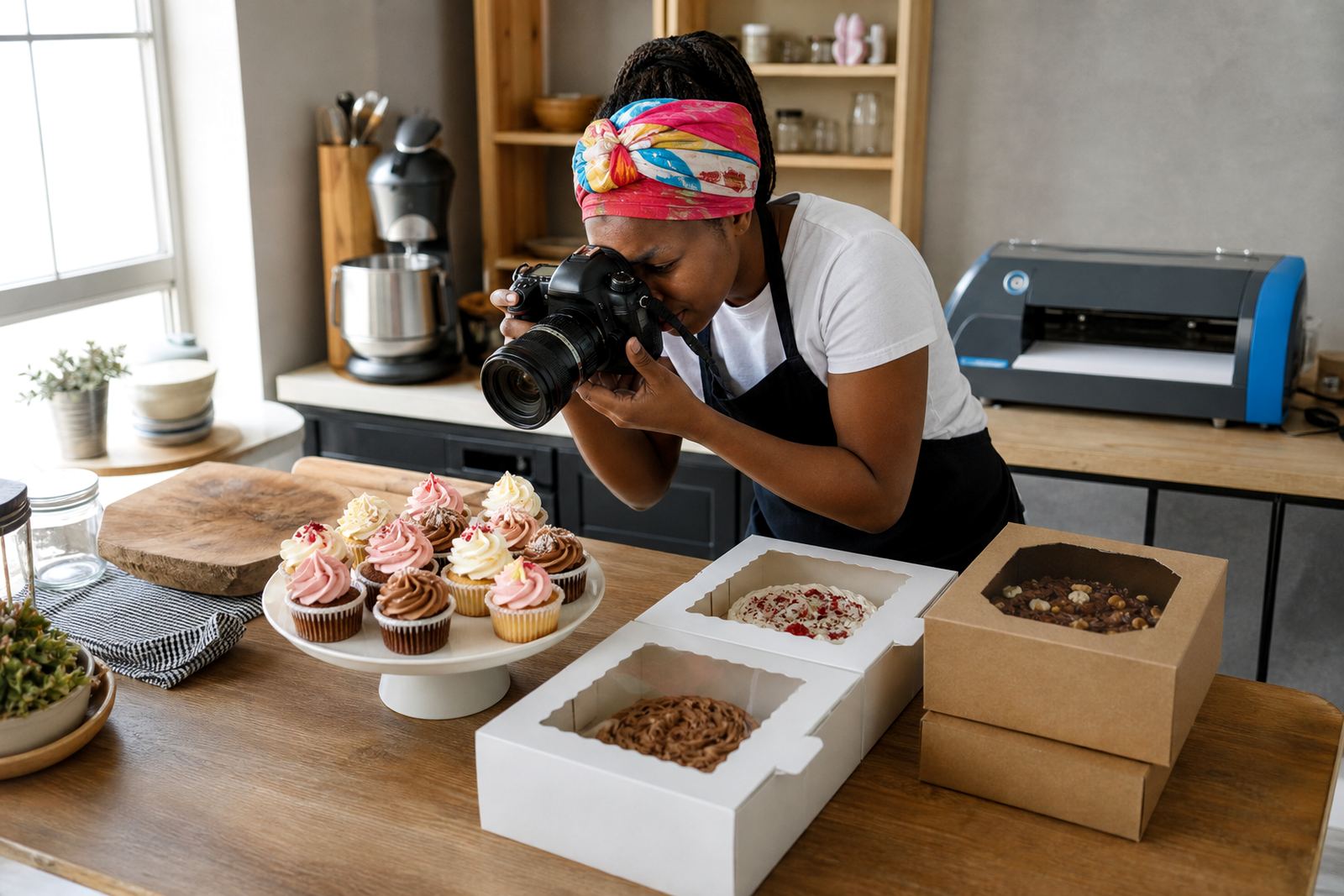
- Show portion size with the container, tray or plate in view
- State collection times in local terms, such as morning drop-off or lunch pickup
- Keep the wording short and direct, especially on mobile phones
- Leave space for special instructions like no chilli, extra gravy or no onions
Common mistakes that slow down food orders
Many cooked food sellers lose orders because the page is too vague. A customer sees a meal, but not the price, not the size, and not the time it is available. Another common issue is using old photos that do not match the current portions. That creates confusion and can lead to complaints at the counter. It is better to show what you sell today, not what was available months ago.
Another problem is forgetting the practical side of ordering. If you only take calls, some buyers will move on. If you only list items but do not say how to pay, people may delay or drop off. A clear WhatsApp order flow, plus payment information and collection notes, removes a lot of that guesswork. For traders who deliver around nearby suburbs, it also helps to state where delivery is available and whether there is a minimum order for certain areas.
Be careful with stock wording too. If a dish sells out quickly, mark it clearly instead of leaving it up all day. Customers appreciate honesty when a meal is finished early. It saves time for both sides and keeps the page tidy.
Typical equipment set for a cooked food trader
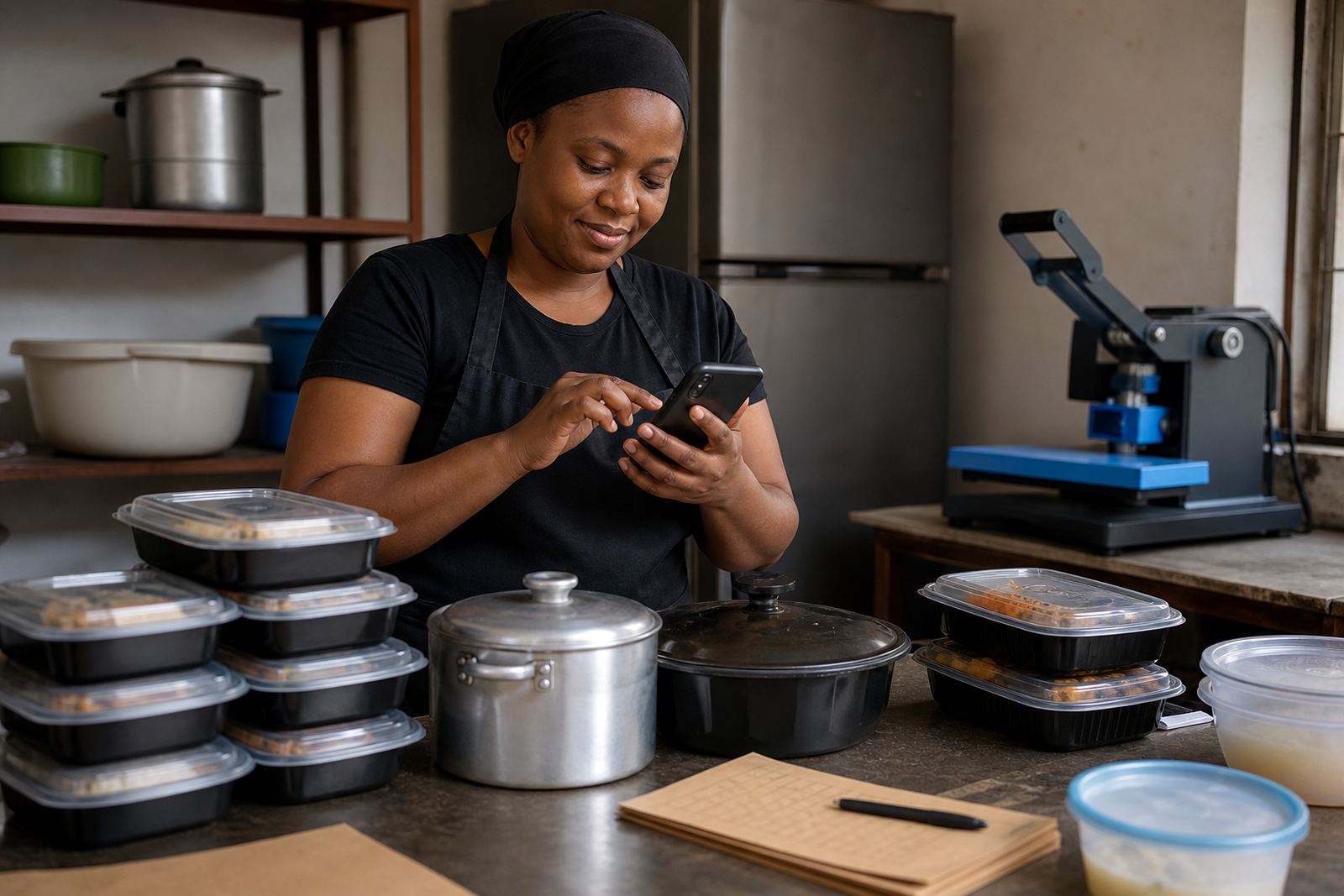
Most cooked food businesses already have the basics in place before they need a store setup. The online side should match the way the business already works, not force a new routine that slows the kitchen down. For this use case, the typical equipment set includes a phone for photos and messages, a simple spreadsheet or notebook for orders, and whatever payment method the business already uses for trade.
- Smartphone for meal photos and customer messages
- Charging point and backup power where the shop depends on a phone or router
- Containers, trays or packs that are easy to photograph neatly
- Price list for single meals, combos and bulk orders
- Notebook, printed slip or digital list for cut-off times and pickups
- Delivery bag or transport cooler if meals travel across town
If you run from a home business in Soweto, Tembisa or Alexandra, the setup can be very modest and still look orderly online. The point is not to make the business look large, it is to help customers order in a clear way and keep the daily service moving.
Budget ranges that make sense for food stores
The cost depends on how much needs to be put in place and how many items you want uploaded at the start. A small cooked food store with a few meals, basic photos and WhatsApp order setup usually sits in a lower budget range. A fuller menu with delivery areas, pricing pages, payment info and a catalogue rebuild will sit higher. For many informal traders, it helps to think in stages so the store can grow without forcing everything into one month.
As a rough working range, a simple setup for a handful of products may be around R1 500 to R3 500, while a more detailed store with menu structuring, photo guidance, content writing and support can move into the R4 000 to R9 000 range. Larger catalogues, more careful page planning or staff training can cost more. These are general working ranges only, not a quote. For tax treatment or payment handling, check with SARS or a qualified adviser.
For traders in Johannesburg, Durban, Cape Town, Pretoria and Gqeberha, the right budget is often the one that gets the menu live and keeps it easy to update every week. A food business changes often, so the store should be practical enough to change with it.
Training that helps the kitchen and the counter
Once the store is live, staff need to know how to read orders, change sold out items and answer WhatsApp messages without mixing up the menu. Training works best when it covers the actual flow of the day: morning prep, lunch rush, cut-off times, and end of day updates. That is more useful than long theory. If the person taking orders is different from the person cooking, both should understand where the latest list sits.
SellThat supports cooked food sellers with store setup, product upload help, photo guidance, pricing page help, WhatsApp order setup, payment info setup, delivery page setup, home page refresh, store content writing, catalogue rebuild, staff training and ongoing support. For traders across Soweto Traders, Johannesburg Traders, Durban Traders, Cape Town Traders, Pretoria Traders, Gqeberha Traders, Alexandra Traders and Tembisa Traders, the goal is a store that matches the pace of daily food sales, not one that gets in the way.
When the menu is clear and the ordering steps are short, customers place orders faster and the trader spends less time repeating the same details. That matters when the pots are on the stove and the next collection is already due.