
A cake page that does the selling before the chat
For a home bakery, the first thing a customer wants to see is the cake itself. Good product photos, a short flavour list and clear size options make a big difference, especially when people are ordering for birthdays, baby showers, church events or school functions. A store should put the cakes in front, then show the details underneath in plain language.
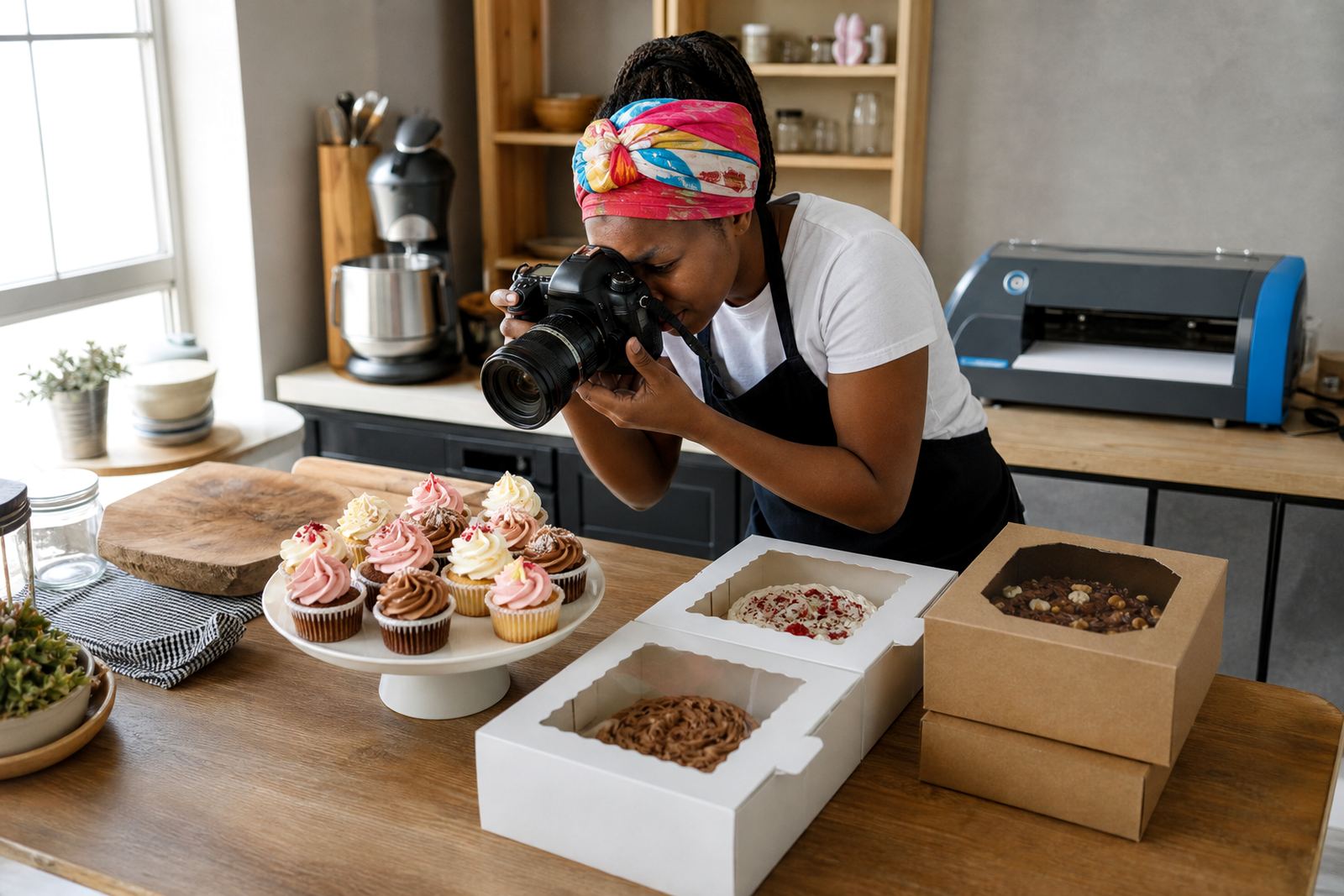
We usually set it up so each product has its own photo, price and note about portions or serving size. If a baker works from a home kitchen in Soweto, Alexandra, Tembisa or elsewhere, the page can still look neat without needing a big budget or fancy equipment. A phone camera, a clean counter and natural light are often enough to start. A missing photo or a blurry one can push customers away faster than a higher price.
- Use bright, close photos of whole cakes and slices
- Add flavour names, size options and topping notes
- Show whether the cake is available for pre-order only
- Keep the wording short so people can scan it on a phone
What a home bakery store should show first
Visitors should not have to hunt for the basics. A strong home bakery page leads with order times, collection points, delivery options and WhatsApp ordering. If you bake after load-shedding or use a fridge for fillings, the site does not need to explain the kitchen, but it should be clear about order cut-off times and when cakes are ready for pickup. In Johannesburg or Durban, where customers often order quickly for weekends, clarity matters.
The home page can carry a short welcome, then point people to a pricing page, a gallery, and the order contact method. If you sell cupcakes, loaf cakes, custom celebration cakes and treat boxes, these can each sit in their own section. That keeps the catalogue tidy and makes it easier for customers to choose without scrolling through everything at once.
- Home page with your main cakes and special offers
- Pricing page with sizes, fillings and add-ons
- Order page or WhatsApp link for quick messages
- Delivery page with pickup times and area notes
The usual equipment set behind the scenes
Most home bakers already have the core tools they need. A mixer, oven, measuring tools, cake tins, cooling racks and storage tubs are common starting points. Some bakeries also use a printer for labels, a ring light for photos and a phone with a decent camera. If the business handles icing, decorated boxes and dispatch, then a clean packing table and simple shelving help keep things orderly.
When setting up the store, it helps to think about how the business works on a normal baking day. Which cakes are made to order, which are ready for same-day collection, and which need two or three days lead time? That structure should guide the pages. A cake with three flavour choices and two sizes should not be buried in long paragraphs, and a customer should not need to message just to find the price range.
For a small home bakery, the budget can start around R1 500 to R5 000 for basic photos, product listing help and store setup support. A more detailed catalogue with several pages, extra content writing and training can sit higher, often from R5 000 to R12 000 or more depending on how much is needed. The exact figure depends on the number of products, how much content has to be prepared and whether the shop needs payment and delivery pages too.
Layout choices that suit cakes, cupcakes and treats
Home bakeries do well with layouts that feel warm but not cluttered. A banner photo of a finished cake works well, then the page can move into smaller cards for cupcakes, mini cakes, cookies and custom orders. If the bakery serves Pretoria, Cape Town or Gqeberha, the same layout can still work because the important part is speed on mobile and easy reading. People often browse while standing in a shop queue or on public transport.
A clear layout also helps with seasonal work. During December, Easter or wedding season, a baker may have new flavours and limited slots. The store can highlight those notes without redoing the whole page. A small section for order deadlines, deposit notes or pickup windows can save a lot of back-and-forth on WhatsApp.
- Group products by category so people find what they need fast
- Place order information near the product, not far away
- Use short captions for size, flavour and decoration choices
- Keep the contact button visible on mobile screens
Mistakes that cause missed cake orders
One common mistake is putting up pretty photos but no prices. Customers then ask repeatedly, and some simply move on. Another is forgetting to mention whether the cake is custom-made, pre-order only or available same day. A third mistake is having too many long paragraphs and no clear order path. On a busy phone screen that can be frustrating, especially for customers trying to arrange a cake quickly for a family event.
It also helps to avoid vague wording around delivery. If the bakery only delivers in certain areas or uses pickup by appointment, that should be stated plainly. If a customer must bring a cooler bag for chilled desserts, say so. If payment proof needs to be sent before baking starts, make that part of the order flow. These details reduce confusion and help the kitchen run in a steadier way.
Support for traders who bake from home
SellThat works with informal traders, spaza shops and home businesses across Soweto, Johannesburg, Durban, Cape Town, Pretoria and Gqeberha, including traders in Alexandra and Tembisa. For home bakers, the useful parts are the practical ones: store setup, product upload help, photo guidance, pricing page help, WhatsApp order setup, payment info setup, delivery page setup, home page refresh, store content writing, catalogue rebuild, staff training and ongoing support.
We keep the setup focused on what the business actually needs. If a baker wants to show cakes, set collection times and make it easier for customers to order through WhatsApp, that can be arranged around the way the kitchen already works. For tax or legal questions, check with SARS or a qualified adviser so the business details sit on the right footing.