
A clothing store that fits the way South Africans shop
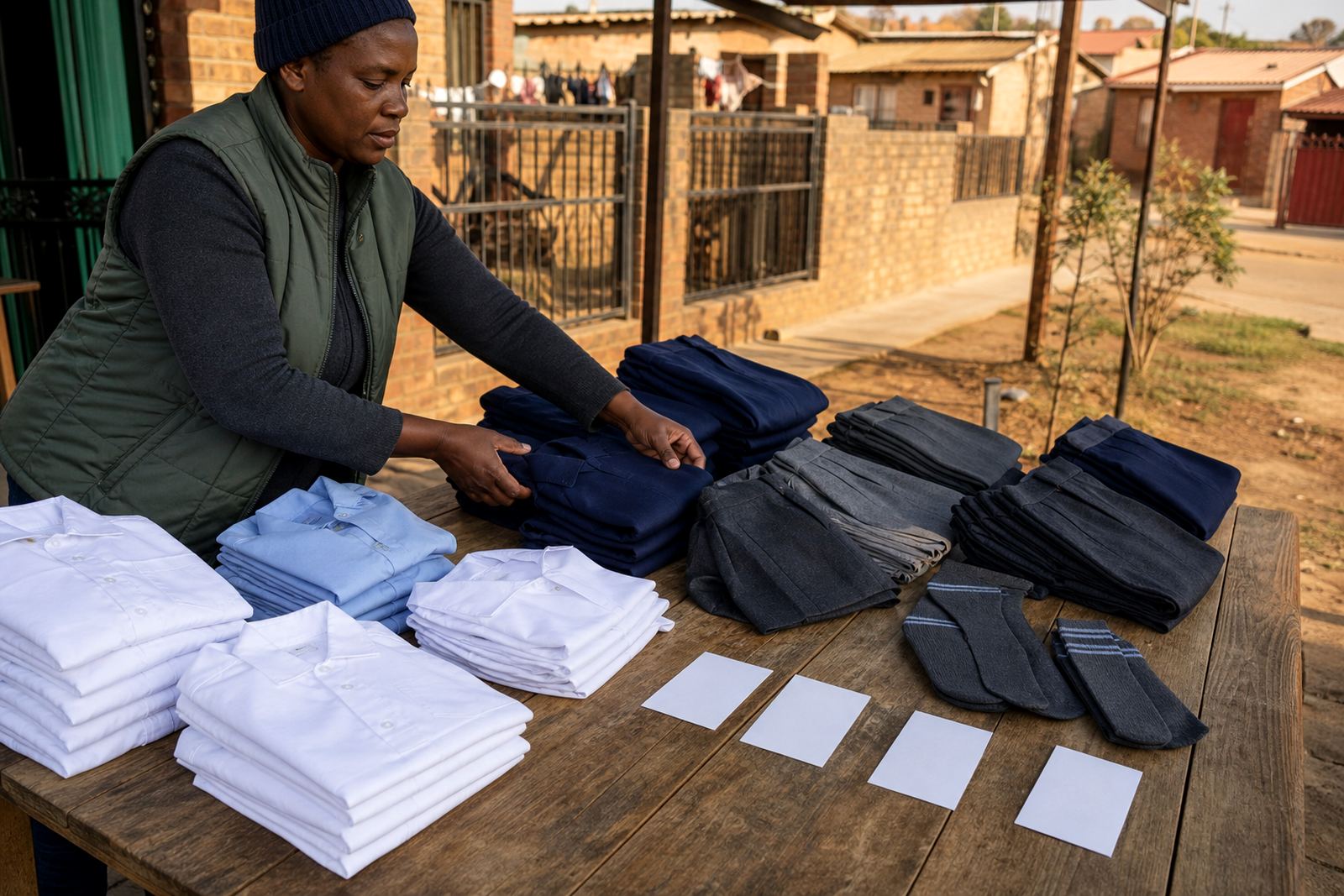
Fashion sellers often work from a small rack at home, a market stall, a salon corner or a table in a busy passage. Customers browse on a phone, compare a few items fast, then ask about size, colour, fabric and delivery. A simple online store gives that trader one place for new arrivals, repeat stock and price updates, instead of trying to keep everything inside chat messages.
For fashion, the store layout matters as much as the clothing itself. A visitor should see women’s, men’s or kids’ ranges clearly, then move into tops, trousers, dresses, shoes or accessories without hunting through mixed posts. A clean first page also helps mobile shoppers in Soweto, Johannesburg, Durban, Cape Town, Pretoria and Gqeberha find what they want on slower connections and smaller screens.
In many cases the trader already has the stock. What is missing is structure. That means product names that make sense, clear size notes, and a place for new arrivals to sit beside older lines without confusion. If the store is meant for everyday clothing sales, the first job is to reduce friction for the shopper and keep the trader from repeating the same details all day.
Typical setup for fashion traders
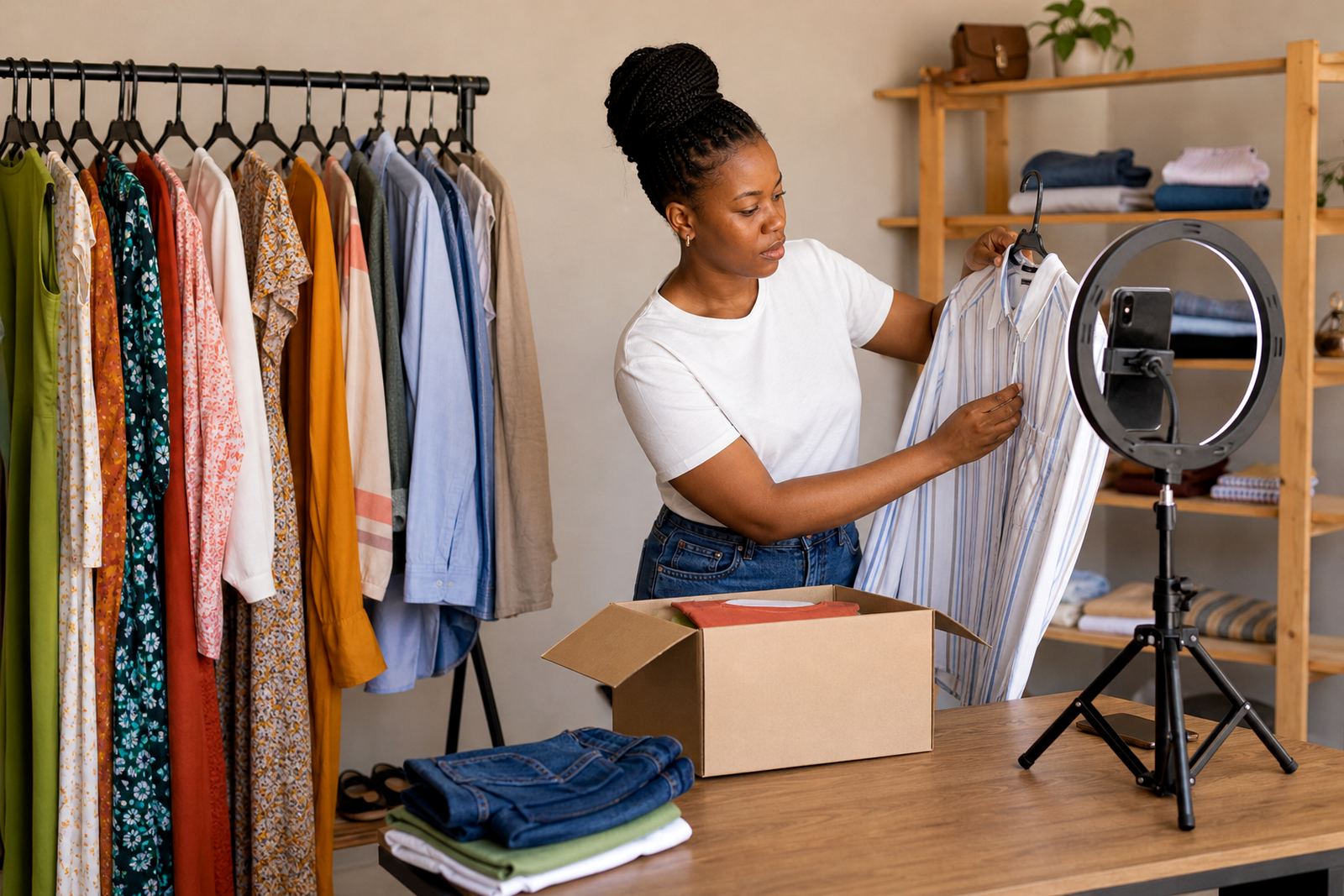
A fashion store can run well with a modest equipment set. A smartphone with a decent camera is usually the main tool for taking photos, and a second device or laptop can help with editing text, checking orders and updating prices. Good natural light near a window is useful, especially for showing true colour on black, white and pastel items. Plain hangers, a clean wall, a folding backdrop or a neatly ironed sheet can make stock look more organised.
For clothing sellers, the usual setup includes:
- Smartphone photos taken in daylight or under bright indoor light
- Measuring tape for waist, bust, hip, length and sleeve notes
- Size guide with local size references where needed
- Simple price pages for each category
- WhatsApp order link or order instructions
- Delivery area notes for local drop off or courier use
Some traders also use a basic printer for order slips, labels or stock notes. That is useful when several colours or sizes are moving at once and the business needs to keep track of what is sold, reserved or on hand. In coastal places such as Durban or Gqeberha, garments should be stored away from damp corners and direct sea air where possible so they stay in good condition.
How to plan the store so shoppers can move fast
The best fashion stores are organised around how people buy. Start with categories that fit the stock on hand, then build from there. If you sell everyday wear, separate new arrivals from clearance items, and keep kids items apart from adult ranges. A shopper should not need to scroll through a long mixed list to find a specific item.
Useful planning points include:
- Use one clear product photo first, then add side and back views where needed
- Show sizes, fit notes and colour options on the same page as the item
- Keep pricing visible instead of hiding it in the caption
- Place a WhatsApp order button or clear order step on every product page
- Make delivery areas and collection points easy to find
When new stock arrives, update the catalogue straight away so the store does not show sold items as available. That mistake causes extra messages and can damage trust fast. A simple home page refresh each week or when fresh stock lands can keep the store current without making it feel overcrowded. For traders in Johannesburg townships or busy centres in Pretoria, the clearer the navigation the less time is wasted on back and forth questions.
Product photos that help clothing sell
Fashion is visual, so photos carry a lot of weight. A trader does not need a studio, but the lighting must be even and the item should be shown properly. Creased shirts, shadowy dresses and blurry shoe pictures make it harder for customers to judge quality. In many cases, one good photo can do more than several poor ones.
Photo guidance should cover the basics: hang the item neatly, flatten the fabric where possible, and avoid busy backgrounds that distract from the clothing. If an item has texture, print detail or embroidery, take a close shot as well. For outfits, a full view plus a detail photo helps the buyer understand the fit. For shoes and accessories, show the front, side and sole or clasp where useful.
It also helps to keep the image style consistent. When one page uses bright daylight and the next is shot in dark indoor light, the store starts to look untidy. A short routine for taking photos on the same wall or against the same clean background can save a lot of rework later.
Payments, WhatsApp orders and delivery choices
Clothing buyers in South Africa often want a quick path from browsing to ordering. That is where WhatsApp order setup helps. A customer can ask for a size, confirm a colour, and send an order without leaving the store page. For a small fashion business, that is often easier than expecting every buyer to complete a long checkout step first.
Payment information should be written plainly. Some traders use bank transfer, some use card payment options where available, and some allow cash on collection. The store should make it obvious how the customer pays, what details are needed and when payment is expected. Keep the wording calm and practical so people do not feel uncertain before placing an order.
Delivery pages should also be straightforward. If a trader offers local drop off, courier delivery or collection from a point in Soweto or another area, that should be explained clearly. The more exact the store is about delivery zones, collection times and any extra charge, the fewer disputes there will be later. For tax or legal questions linked to payments and records, it is better to check with SARS or a qualified adviser.
Common mistakes fashion traders make on first setup
Many clothing sellers already know their product range very well, but the store can still feel confusing if the details are rushed. A common problem is using the same photo for several items, then relying on chat messages to explain the differences. Another is leaving prices off the page and waiting for buyers to ask, which slows down the sale.
Other mistakes include mixing old stock with new arrivals, writing size notes too loosely, or using names that mean something to the seller but not to the customer. If a trader sells fitted dresses, stretch pants or school wear, the measurements need to be easy to read. A buyer should not have to guess whether an item runs small or large.
Budget also needs planning. A basic fashion store setup can sit in a lower range if the trader already has product photos and simple content, while a bigger rebuild with catalogue organisation, content writing, delivery pages and training can move into a higher range. In practice, small clothing traders often plan for somewhere around R1 500 to R5 000 for a simple setup and around R5 000 to R15 000 when there is a full catalogue rebuild, photo guidance, staff training and extra support. The exact figure depends on how much needs to be uploaded and cleaned up.