

A store layout that suits hair products
Hair sellers usually work with a mix of single items, sets and add-ons, so the store has to be easy to scan on a phone. A customer should be able to move from wigs, braids, weave, ponytails, clips, oils and caps to a pricing page without hunting through too many clicks. For informal traders and home businesses, that usually means a clean home page, a short menu and product groups that match how people actually shop.
In South Africa, many customers will compare options while they are on WhatsApp, using mobile data and a small screen. That means your store needs clear product names, a simple order button and a visible way to ask about stock, colour shades and delivery. A good structure also helps if you serve Johannesburg, Durban, Cape Town, Pretoria and Gqeberha, because customers in each area can see the same details and order in the same way.
- Group products by type, such as wigs, braids, attachments and care items.
- Keep one page for prices, bundles and colour options.
- Add a short WhatsApp order path for customers who want quick help.
- Use delivery notes that explain collection, local drop-off or courier options.
What hair traders usually need to show online
Hair products sell better when the customer can see the finish, not just the name. Good product photos should show the front, side, back and close-up detail where needed. For colour work, it helps to photograph on neutral cloth, in daylight or bright indoor light, and to keep the same background across the catalogue so the shades do not look different from one item to the next. If you sell human hair, synthetic hair or mixed bundles, the label should be clear so people know what they are paying for.
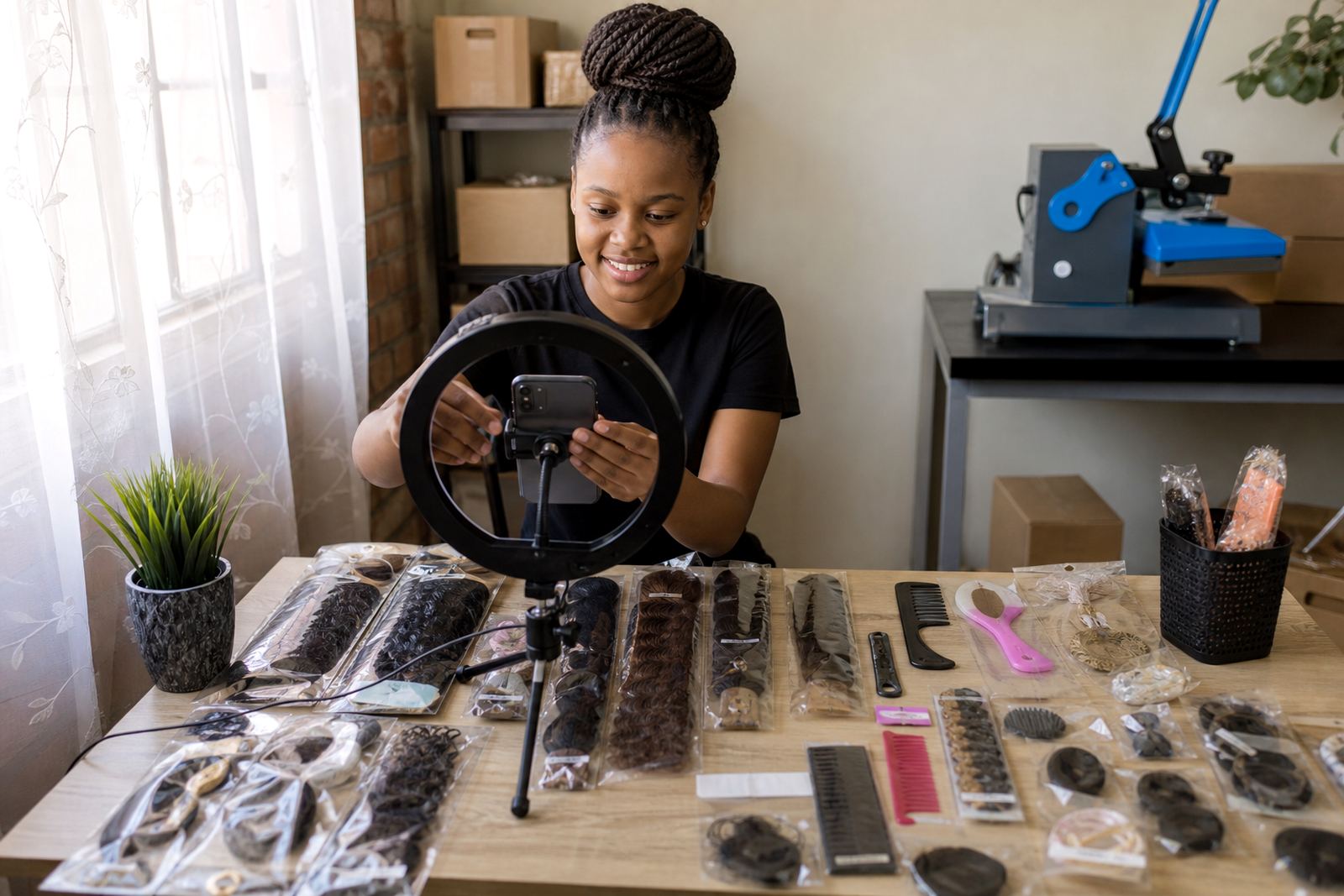
Typical equipment for this kind of store is simple. A decent smartphone, a ring light or bright lamp, a plain wall or backdrop, a measuring tape for length, and a few storage tubs or hanging racks make product prep easier. If you also do installations or salon retail, you may want a small list of bundle sizes, care instructions and aftercare items. That helps avoid confusion when a customer asks whether a 14 inch bundle includes one pack or two packs, or whether a certain braid colour is in stock.
- Hair extensions and weaves in different lengths.
- Wigs, ponytails, braids and clip-in pieces.
- Shampoos, oils, caps, combs and styling accessories.
- Bundle offers for school, weddings, salon use or resale.
Pricing pages that stop confusion before the order
A pricing page for hair sellers should not be crowded. Customers want to know the price, length, colour, texture, whether the item is heat safe, and if the price changes with custom work. If you do not separate these details properly, people phone or message for the same questions over and over, and that slows sales. It also helps to make it plain when a product is for collection only, or when delivery charges are added later.
For informal traders in Soweto, Alexandra, Tembisa and nearby areas, price clarity matters because many buyers are comparing more than one option before they pay. A tidy page with simple ranges, bundle deals and a short explanation of what is included can reduce mistakes. If you accept bank transfer, card payment or other payment methods, the payment information should sit close to the pricing so the customer does not have to search for it.
- List the item price next to the length or bundle size.
- Show any extra charge for custom colouring or urgent styling work.
- State whether the price includes delivery or not.
- Use one order path for WhatsApp, payment info and delivery details.
WhatsApp orders and payment details that work on a busy day
Hair sellers often take orders from customers who want to ask one or two questions before paying. WhatsApp is useful for that, but the store should still do the heavy lifting. A customer can browse the product page, tap to open WhatsApp, and send the exact item name or code. That reduces back-and-forth and keeps the catalogue easy to manage when you are serving both walk-in customers and online buyers.
Payment information must be straightforward. If you accept card payments, EFT or cash on collection, state it in one place and use the same wording across the store. If a payment plan or deposit applies, put that detail beside the product or checkout note. Hair traders also need to be careful with order notes for colour matching, lace type, length and quantity. A small mistake there can lead to returns or unhappy customers, especially where the customer expects a very specific shade.
- Use product codes so customers can order the exact style.
- Keep a short note box for colour, length and quantity.
- Place payment and collection details near the checkout steps.
- Use one clear WhatsApp message format for quick orders.
Delivery choices for local customers and longer routes
Hair products are compact, which makes them easier to move than many other retail items, but delivery still needs planning. Some traders offer same-day local drop-off in Johannesburg or Pretoria, while others use courier services for customers in Durban, Cape Town or Gqeberha. The store should show what happens after payment, how long packing usually takes and whether the customer can collect from a home base, spaza shop point or trading location.
For coastal areas, packaging matters because humidity can affect certain items and cardboard can soften if it is not sealed properly. Use clean bags, labelled parcels and a simple tracking note if you send orders out often. If you work from a salon chair, back room or home business space, make sure the delivery page explains the collection window and the best way for customers to confirm their order. That lowers missed pickups and avoids confusion on busy days.
- Collection from your trading point.
- Local delivery in selected areas.
- Courier delivery for out of town orders.
- Packaging notes for hair bundles, wigs and accessories.
Pages that help beauty buyers decide faster
A hair store works best when the pages answer the usual questions before the customer asks them. Product pages should show the item, length, colour and any key detail about texture or care. The home page can point buyers toward wigs, braids, bundles and accessories, while the pricing page keeps numbers easy to find. If you also sell to salons or resellers, add a short section for bulk orders or repeat buying terms where needed.
SellThat supports informal traders and home businesses that need a practical online shop without unnecessary clutter. For hair sellers, the value is in showing enough detail to build confidence, especially when customers cannot touch the product before they order. When the layout is clear and the product information is neat, people spend less time asking basic questions and more time placing the order that suits them.