
A Jabulani trader with stock that changes by the week
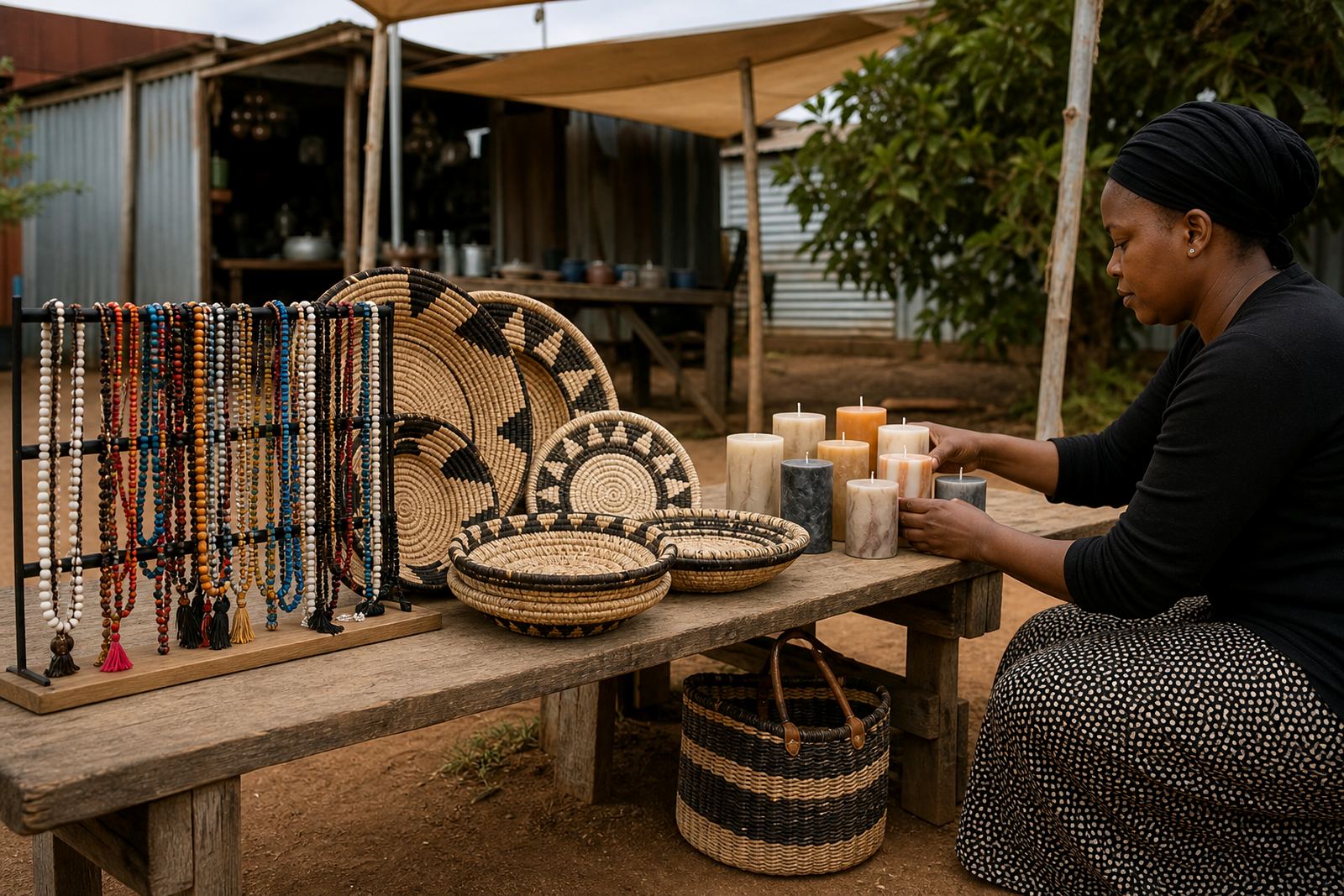
The client works from Jabulani in Soweto and sells handmade gifts, décor pieces and made-to-order items for birthdays, housewarmings and small events. Stock changes often because some pieces are one of a kind, while others are made in small batches, so the store had to be easy to update without long admin or complicated steps.
The brief was clear: create a simple online store that could show what is available now, what can be made to order, and how customers should place requests. The trader also wanted a layout that felt neat on a phone, because many customers browse during the day on mobile data and do not want long pages or heavy images.
- Town: Jabulani, Soweto
- Product type: handmade gifts, décor pieces and custom requests
- Main goal: make ordering easier and reduce back-and-forth on WhatsApp
- Primary device focus: mobile-first browsing
The brief had to fit real trading conditions
The store needed to work around a few practical limits. Some product names were still being finalised, a few photos were taken in mixed light, and the trader wanted custom order requests handled in a way that did not confuse ready-made items with made-to-order work. We also had to keep the wording plain and direct, so customers could understand sizes, colours and lead times without phoning for every detail.
There was also a need to show payment choices carefully. Rather than adding anything complicated, we set up clear payment information so customers know what to do after placing an order. Delivery needed the same treatment, with local drop-off and courier wording kept separate from collection options. That way the store can guide buyers without making promises that depend on location or item size.
- Mixed stock: ready-made items and custom requests
- Image challenge: uneven lighting on some product photos
- Content challenge: short, clear descriptions for mobile users
- Order handling: WhatsApp first, with payment and delivery steps laid out plainly
What we supplied for the store build
We built the store structure, loaded the first product categories and shaped the pages so customers could move from browsing to enquiry without getting lost. The catalogue was arranged by item type, which makes it easier for a shopper to find gifts, décor pieces or custom work in a few taps. The home page was refreshed with a cleaner intro, and the key pages were written in direct South African English that suits informal trade.
We also set up the WhatsApp order path so customers can ask about availability, request a custom version or confirm a basket before paying. Product listings were given simple pricing notes where needed, plus delivery page content that explains collection, local handover and courier use. The work took 3 weeks from the first product list to the final review, with time set aside for content checks and photo selection.
- Store setup and page structure
- Product upload help for the first catalogue
- Photo guidance for clearer product images
- Pricing page help and payment info setup
- WhatsApp order setup and delivery page setup
- Home page refresh and store content writing
Product pages that do not overcomplicate the sale
For handmade goods, the product page has to do more than list a name and a picture. Buyers want to know the size, finish, colour variation and whether the item can be made to order. We wrote the descriptions so they answered those practical questions first, then added short notes that guide a buyer on what to ask next if the item needs a custom touch.
Pricing was handled in a plain format so the customer can see the starting amount or the listed price without guessing. For items that may change because of materials or custom details, the wording leaves room for a quote through WhatsApp. That keeps the store useful for a real trader who may not sell the same thing every day, and it avoids confusion when a buyer wants something a little different. The pages were tested on smaller screens too, because that is where most first visits happen.
- Short product descriptions with size and finish notes
- Custom order wording for made-to-order items
- Pricing displayed in a simple, readable format
- Mobile checks for quick loading and easy tapping
What changed after the pages went live
Once the store was in place, the trader had a cleaner way to show what is available, what can be customised and how orders should move forward. Customers no longer had to ask the same questions about prices, collection or delivery on every item, because the answers sat on the relevant page. That saved time and made the business look more organised, especially for buyers who were comparing gifts for events and home décor for new spaces.
The trader also had better control over customer flow. WhatsApp is still part of the process, but now it supports the store instead of carrying the whole conversation from scratch. The result is a smoother handover from browsing to order, with fewer missing details and less repeat typing. In a busy trading week, that matters. It means the seller can spend more time on making stock and packing orders, and less time explaining the basics over and over.
- Clearer customer journey from browse to enquiry
- Fewer repeated questions about price and delivery
- Better separation between ready-made and custom items
- More order clarity for gift buyers and décor shoppers
Notes we would carry into the next handmade store
If we were setting up a similar store again, we would keep the same approach: short product writing, strong photo selection and simple page logic that matches how informal traders actually sell. That means making room for custom requests, keeping payment details easy to find and not overloading the buyer with extra steps. We would also keep an eye on the photo set early, because good light and a plain background make a bigger difference than people expect.
For a handmade seller in Soweto or any other South African town, the best result comes from a store that feels practical on a phone and steady enough to support daily trading. That includes the basics a real buyer wants to see, such as item details, ordering options, payment guidance and delivery notes. If the business later adds new product lines, the catalogue can be extended without needing to start over. Check with SARS or a qualified adviser on any tax or formal business questions linked to selling online.
- Keep the structure simple enough for fast updates
- Use photos that show texture, colour and size clearly
- Leave space for custom work without mixing it into fixed stock
- Write payment and delivery notes in plain language
Key facts
| Project type | Online store for handmade gifts, décor pieces and custom requests |
|---|---|
| Client location | Jabulani, Soweto, Johannesburg |
| Timeline | 3 weeks |
| Core pages | Home, product categories, pricing, WhatsApp orders, payments, delivery |
| Support included | Product upload help, photo guidance, content writing and training |
| Store format | Mobile-first, simple catalogue for informal trading |