
Put the most ordered pieces at the top
When a buyer lands on a craft store, they should not have to hunt through every item to find the basics. Start with your most requested goods first, then group the rest into tidy sections such as home decor, gifts, beads, fashion items, kids items, and custom made pieces. A clean order helps people scan the page quickly, especially on a small screen while travelling by taxi or standing in a queue.
For a Soweto seller making woven baskets, clay items and beaded accessories, the home page can lead with the best sellers and a short line about custom colours or sizes. That way the buyer sees what is ready, what can be changed, and what needs a special request. Keep each section short and practical, with enough detail to avoid extra back and forth.
- Group similar items together instead of mixing all products in one long list
- Lead with items that sell often or carry a higher profit margin
- Use clear names, such as small beaded pouch, round basket, or wall hanger
- Show whether the item is ready-made or made to order
Use photo galleries that show the real details
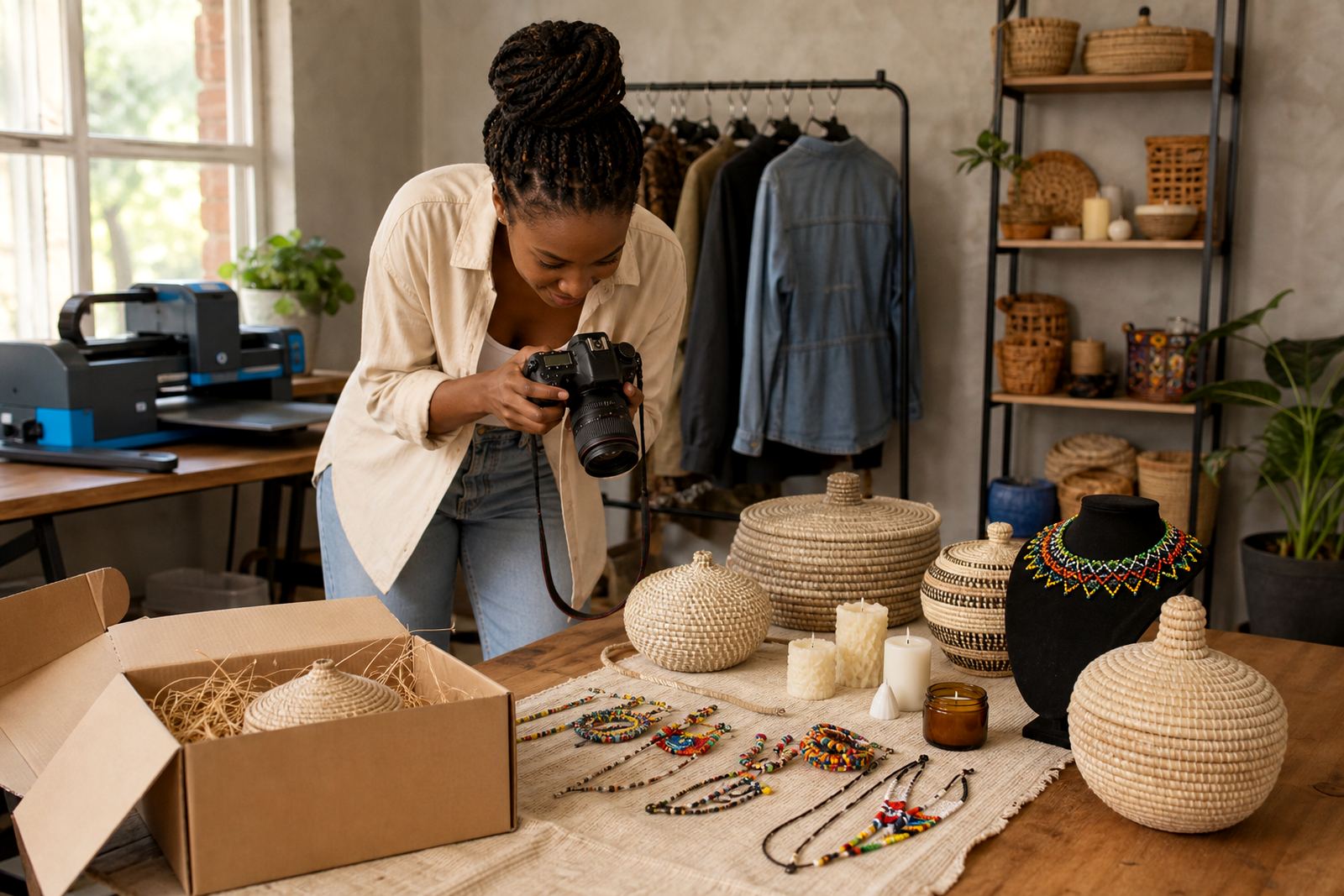
Craft items are sold on appearance, so the photos must do proper work. Buyers want to see colour, finish, size and texture before they ask for anything. A gallery with one front photo and a few close-ups is usually better than a single image that hides the details. If the item comes in different shades or patterns, show the options one by one so the customer does not need to guess.
Natural light helps a lot, especially for items with beadwork, stitching or painted surfaces. In coastal places like Durban or Gqeberha, glare and damp air can affect how a product looks in photos, so it helps to shoot near a bright window and keep the background plain. A simple wall, cloth, or clean table surface works well enough. Avoid clutter in the frame because the product should remain the focus.
- Take one full view, one close-up, and one photo showing the item in use or held in hand
- Use the same background for most products so the catalogue feels neat
- Include size notes where needed, such as length in centimetres or diameter in millimetres
- Show natural colour as accurately as possible, especially for dyed or painted items
Make custom requests easy to send
Many craft buyers want something made to order. A clear request section saves time because people can say what they need before they send a WhatsApp message. This section should explain the choices that can be changed, such as colour, wording, size, finish or quantity. It should also say what details the seller needs from the buyer, without using long forms that feel heavy on a phone.
For example, a Pretoria buyer might want a gift basket with a school colour theme and a name tag added. If that request section asks for the item name, preferred colour, quantity and delivery area, the conversation starts in the right place. That helps the trader prepare the quote or confirm the order without chasing missing details.
- Ask for the item name, size, colour and quantity
- Leave space for names, dates or message wording if the item is personalised
- State which changes are possible and which are fixed
- Add a note for bulk orders, special finishes or urgent event orders
Show prices in a way that feels straight
Price pages should be simple enough for a buyer to understand at a glance. If each item has one set price, show it clearly next to the photo. If the price changes by size or by the level of custom work, list the options in a neat table or short bullet points. Buyers dislike hidden numbers, and traders lose trust when the pricing changes too late in the process.
For informal traders in Johannesburg and Soweto, it often helps to separate standard items from made-to-order items. That gives the buyer a clear path and helps the seller protect time spent on custom work. If there are deposits for large orders, mention that plainly. If tax rules or business registration questions apply to your setup, check with SARS or a qualified adviser before publishing anything that affects compliance.
- List the base price, size upgrades and custom add-ons separately
- Use the same currency format throughout the catalogue
- Explain whether packaging or gift wrapping is included
- Make bulk pricing clear only if it is genuinely offered
Keep WhatsApp order steps close to the products
Many craft sales still move through WhatsApp, so the catalogue should support that habit rather than fight it. A buyer should be able to view the item, check the price, then tap through to send the order details. The best setup is short and direct. Place the WhatsApp order option near the product gallery and repeat it near the bottom of the page for people who scroll.
A seller in Alexandra who makes beaded handbags may get more serious enquiries when the order step is near each product rather than hidden on a separate page. The message can pre-fill the item name and the buyer can add size or colour changes. That is easier for the trader to manage than scattered messages with no context.
- Keep the order button near the product, not only on the home page
- Use a short message prompt with the product name already included
- Ask buyers to confirm colour, size and delivery area in the first message
- Make sure buyers know if collection and delivery are both available
Choose delivery wording that matches real trading
Delivery options should be written in plain language. Some craft sellers hand over orders at a pickup point, some send with a local driver, and others arrange longer-distance delivery to Durban, Cape Town, Pretoria or Gqeberha. The catalogue should make it clear what the buyer can expect without turning the page into a long policy document.
For items that are fragile or handmade, say how they are packed and whether the buyer should inspect the parcel on arrival. If a seller uses a courier or a local drop-off arrangement, the delivery section should say who bears the risk during transit and what happens if the address is incomplete. Keep it practical, because customers shopping from home often want only the next step and not a wall of text.
- Separate collection, local delivery and courier delivery if all three are offered
- Mention any delivery areas served, including nearby townships and city centres
- Explain packaging for fragile or one-off handmade items
- State whether the buyer must share a full address or a pickup point
A craft catalogue should feel ready for a real order
The strongest catalogue is not the one with the most pages. It is the one that helps a customer move from looking to ordering without confusion. That means the photos must be clear, the request section must be simple, and the pricing must match the actual item. When those parts sit together, the catalogue becomes a proper sales tool instead of a scattered list of products.
Think of a home business in Soweto selling hand-painted mugs and woven table pieces. A buyer from Durban should be able to see the range, compare prices, send a WhatsApp order and choose a delivery option without needing a long explanation. That kind of structure saves time for the trader and gives the buyer confidence that the order is being handled properly.
For craft sellers, organisation is not just neatness. It is part of how the work is presented, quoted and sold.