
The brief from a busy Dobsonville beauty counter
The client was a local beauty trader in Dobsonville serving walk in customers and neighbours who wanted to order after hours. The brief was practical: show hair products, accessory bundles and a few ready made offers in a way that felt tidy, easy to scan and simple to update when stock changed.
The store needed to work for shoppers in Soweto first, but also for buyers in Johannesburg and other cities who often ask for delivery or collection options before they commit. The trader wanted the pages to look organised on a small screen, because most of the traffic was expected to come from phones rather than laptops.
- Client type: informal beauty trader
- Town: Dobsonville, Soweto
- Store focus: hair products and accessory bundles
- Main order channel: WhatsApp
What made this store tricky to sort out
The main challenge was not adding products, it was making the information easy to trust and quick to read. Beauty buyers often want to see the style, shade, size and price at a glance, and if those details are mixed together the customer usually leaves without asking questions. Some items also had several variants, so the pages had to show choices without turning into a long, messy list.
Another factor was the delivery setup. The client wanted to offer local delivery where practical and also make collection clear for nearby customers. That meant the store needed separate sections for ordering, payment info and delivery notes, plus a simple WhatsApp path for people who preferred to chat before paying. We also kept in mind that many shoppers in the area browse while on the move, so the page structure had to stay light and quick to open.
- Lots of small item variations
- Mobile first browsing
- Clear pricing and bundle structure
- Delivery and collection details kept separate
How we shaped the product pages
We started by grouping the catalogue into simple sections so the customer could move from hair products to accessories without hunting around. Each item needed a clean photo, a plain product name, a short description and a price field that stood out. Where the trader had bundles, we laid those out as separate entries so the customer could see exactly what was included.
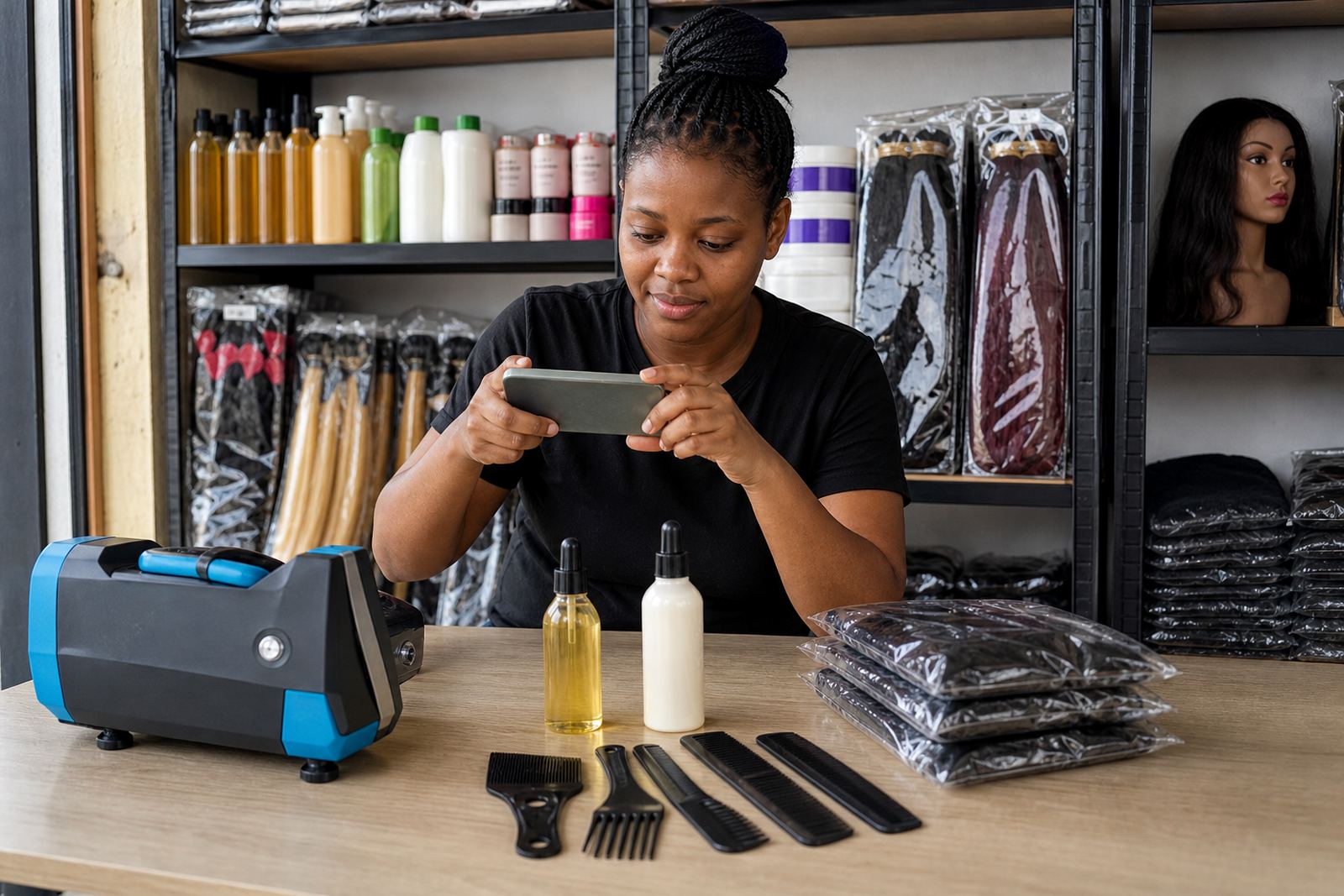
Photo guidance mattered quite a bit. We advised on bright, even lighting, plain backgrounds and close framing so the packaging and colours stayed readable on a phone screen. A few images were adjusted in size and order to keep the gallery looking neat. That made the store feel organised without losing the local, informal trading feel the client wanted.
- Product upload help for individual items and bundles
- Image guidance for lighting, framing and size
- Short descriptions that fit phone screens
- Clear price display beside each item
Pricing, WhatsApp ordering and payment notes
The pricing page was set up to reduce back and forth messages. We kept the language plain and grouped items by type, so customers could compare options before sending a WhatsApp order. That helped the trader handle enquiries more smoothly, especially during busy periods when there were several requests at the same time.
We also added a WhatsApp order flow that matched the way informal traders often work in South Africa. Customers could send a message with the item name, quantity and delivery area, then the trader could confirm stock and next steps. Payment information was laid out in a simple way, with clear notes for the methods the trader uses, and a separate delivery page explained the collection areas and the limits that can apply depending on where the customer is based.
- Pricing page help for easy comparison
- WhatsApp order setup for quick enquiry handling
- Payment info setup with plain instructions
- Delivery page setup for local and out of area orders
Four weeks from loose notes to a working store
The project took four weeks from the first content review to the final store check. In week one we mapped the product groups and worked through the photos. In week two we shaped the home page and the main catalogue sections. Week three was used for pricing, WhatsApp and delivery pages, plus the wording for the store content. In week four we checked the catalogue rebuild, tested the flow on mobile and guided the client through basic updates.
The work was steady rather than rushed, which suited the trader because stock and bundle details changed a few times while we were building. We kept the layout flexible so new items could be added without breaking the structure. That mattered for a beauty seller, where one missed detail can cause a customer to ask the same question over and over. The final result was a store that could be maintained without needing a complicated handover.
- Week 1: product grouping and photo review
- Week 2: home page and catalogue structure
- Week 3: pricing, WhatsApp and delivery pages
- Week 4: testing, catalogue rebuild and training
What changed once the store was live
After launch, the trader had a cleaner way to present products to new buyers and repeat customers. The tidy galleries made it easier for shoppers to compare hair items and accessory bundles, while the pricing page cut down on repeated messages asking for basic details. The store also gave the trader a more practical way to send people to one place instead of sharing scattered photos in chat threads.
The client also had staff training on everyday updates, including how to change prices, swap product photos and add new stock as it arrives. That support is useful for an informal trader because product ranges can shift quickly, especially when suppliers change packaging or colours. For a beauty seller in Dobsonville, having one place to manage those details makes day to day trading less messy.
- Cleaner product presentation for phone users
- Fewer repeated questions about basic details
- Simple training for pricing and stock changes
- Better fit for WhatsApp driven sales
The parts worth repeating on the next beauty store
If we were setting up another beauty store for a trader in Soweto, Durban or Pretoria, we would follow the same order: organise the catalogue first, then handle the photos, then lock in the pricing and order flow. That sequence keeps the work practical and avoids having to redo pages after the content is already live. It also gives the client a clear view of how the store will read on a phone before the final checks.
For beauty traders, we would keep pushing for short product descriptions, clear bundle labels and a clean WhatsApp handover. Those details sound small, but they save time every day and help the customer feel more sure before ordering. If a trader is also working through municipal trading rules or tax questions, the right move is to check with SARS or a qualified adviser so the business side is handled properly.
- Start with product grouping before adding extra pages
- Keep bundle names short and specific
- Use photos that hold up on small screens
- Check tax and compliance questions with SARS or a qualified adviser
Key facts
| Project | Dobsonville Beauty Seller |
|---|---|
| Client type | Informal beauty trader |
| Town | Dobsonville, Soweto |
| Core features | Product galleries, pricing page, WhatsApp orders, payment info, delivery page |
| Timeline | 4 weeks |
| Support included | Product upload help, photo guidance, store content writing, staff training, ongoing support |